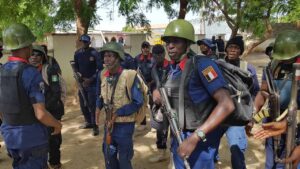
Lanre Olagunju
On a dusty road between Gurusu and Anka, three travellers disappeared into the forest at gunpoint.
For many residents of Zamfara State, such incidents have become grimly familiar. A blocked highway, armed men emerging from the bush, and another family left waiting for news. In parts of north-west Nigeria, bandits have long dictated movement, commerce and, at times, even where people can live.
But this time, the story took a different turn.
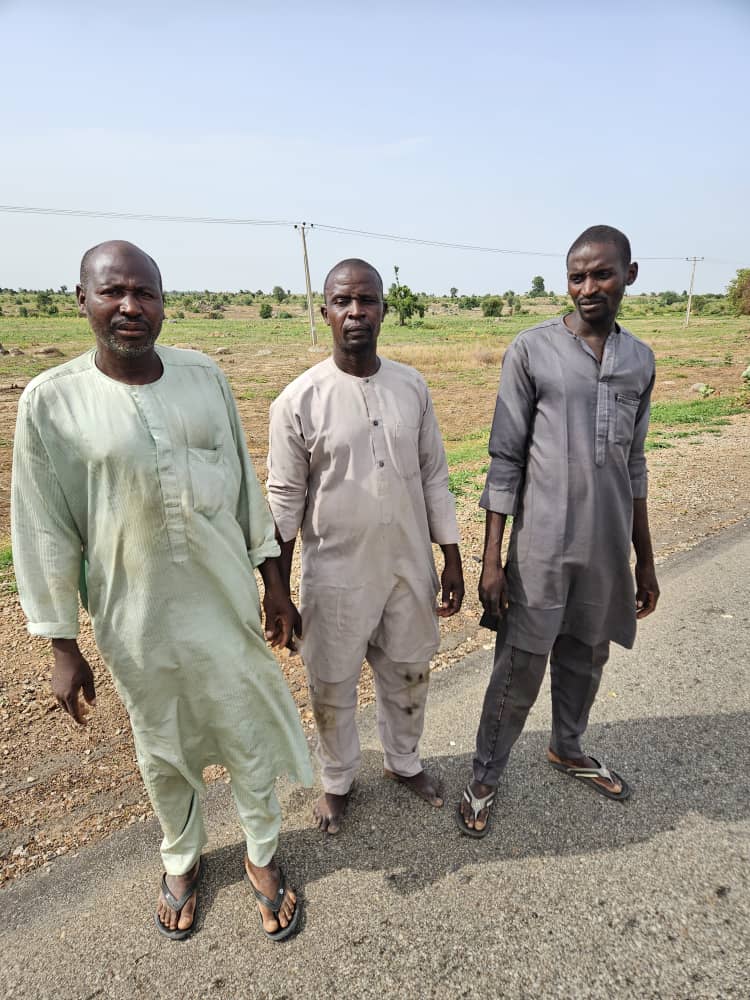
Within hours of receiving a distress call, police operatives tracked the kidnappers into a nearby forest. A gun battle followed. By the time the shooting stopped, the abductors had fled, leaving behind blood trails and, more importantly, their captives.
The three victims returned home unharmed.
Elsewhere in the state, another police operation was unfolding — one that prevented tragedy before it occurred.
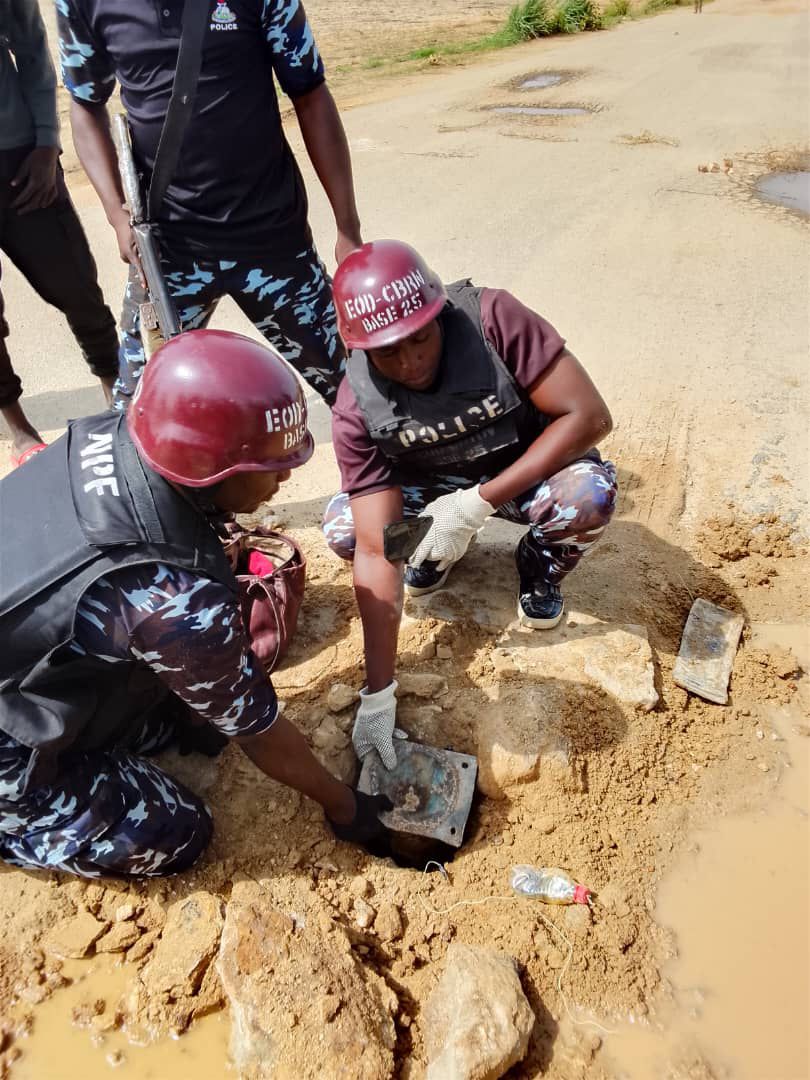
Acting on intelligence provided through community sources, police operatives and explosive ordnance specialists recently uncovered and destroyed an improvised explosive device planted along the Kunchin Kalgo axis in Tsafe Local Government Area. Investigators believe the device had been positioned to target commuters travelling along the route. Its discovery meant that a road which could have become the scene of devastation instead became another example of how intelligence-led policing can quietly save lives without a single shot being fired.
Taken together, the two incidents illustrate the evolving nature of the security challenge in Zamfara. In one case, officers pursued armed kidnappers into the forest to rescue their captives. In the other, they neutralised a hidden threat before it could claim victims. Different tactics, but the same objective: denying criminal groups the ability to spread fear and disrupt everyday life.
In another context, the rescue might have been viewed as an isolated success. In Zamfara today, however, it forms part of a broader picture emerging across some of the state’s most troubled communities — one in which security forces are attempting not merely to respond to attacks but to reverse the geography of fear.
Hundreds of kilometres away from the Gurusu-Anka road lies Fegin Kanawa, a community that until recently had become a symbol of displacement.
Months of bandit attacks had emptied the village. Families fled. Farms were abandoned. Homes stood silent. The difficult terrain leading into the community, combined with fears of landmines and improvised explosive devices, turned the area into a place many residents no longer dared to approach.
In conflict zones, abandonment often becomes a victory in itself.
When people leave, armed groups gain more than territory. They gain psychological control. Empty villages become evidence of who truly governs the landscape.
The challenge for security agencies, therefore, is not simply defeating criminals in firefights. It is convincing ordinary people that it is safe to return.
That was the task facing the Zamfara State Police Command.
Under the leadership of Commissioner of Police Ahmed Mohammed Bello, officers launched an operation aimed at restoring security around Fegin Kanawa and neighbouring settlements. Patrols were intensified, strategic locations secured, and security assets deployed across the area.
One family returned. Then another.
Soon, the trickle became a movement.
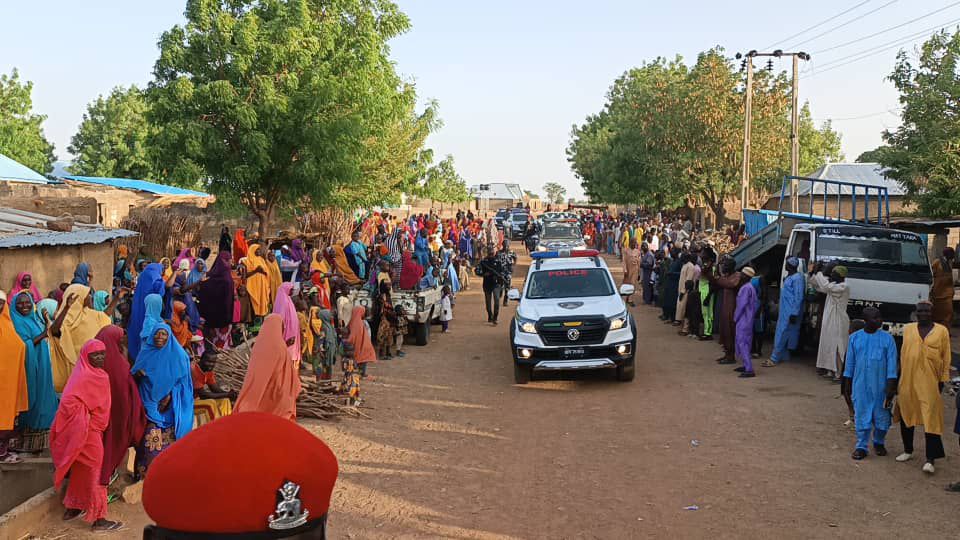
More than 5,000 displaced residents eventually made their way back to Fegin Kanawa, returning to homes, farms and livelihoods many feared had been lost forever.
Behind these gains lies a broader effort by the Nigeria Police Force to reclaim communities where criminal groups had come to dictate daily life.
The directive from Inspector-General of Police Olatunji Disu has been both clear and ambitious: transform no-go zones into go-home zones.
Speaking during a series of strategic meetings with senior officers this week, the police chief urged commanders across the country to maintain relentless pressure on criminal networks and reclaim territories where fear has too often shaped daily life. The message was straightforward: insecurity must be confronted not only with force, but with persistence, intelligence and visible results.
Across several states, including Zamfara, signs of that approach are beginning to emerge. From the rescue of kidnap victims along remote highways to the return of displaced residents to communities once abandoned to bandits, police formations are increasingly measuring success not simply by arrests or weapons recovered, but by something far more tangible — the ability of ordinary people to travel, work and return home without fear.
Residents reportedly greeted returning security teams with prayers, songs and words of gratitude.
In Zamfara, such scenes represent more than a return home. They signal the return of confidence.
Security experts often argue that the true measure of success is not the number of arrests made, but whether ordinary people feel safe enough to resume everyday life.
Can children go to school?
Can traders travel to the market?
Can farmers cultivate their land?
Can families sleep in their own homes?
By those measures, the return of thousands of residents to Fegin Kanawa may be one of the clearest indicators yet of progress.
The rescue of three kidnap victims and the return of 5,000 displaced residents may seem like unrelated events. In reality, they are chapters of the same story.
One operation denied bandits new captives.
The other denied them abandoned territory.

Together, they reveal a security strategy focused not only on pursuing criminals but also on shrinking the spaces in which fear thrives.
Challenges undoubtedly remain. Zamfara continues to face serious security threats, and no single operation can erase years of violence overnight.
Yet in places where roads were once empty and villages deserted, small victories carry outsized meaning.
For years, many communities measured the advance of banditry by the number of people forced to leave.
Today, in parts of Zamfara, another metric is emerging.
Not how many people fled.
But how many have found their way back?
And perhaps that is the most powerful sign of all that the tide may be beginning to turn.